
interview-me 에 대한 딴지
구조적 기준으로 볼 때, 기존 addyosmani/agent-skills@interview-me SKILL은 특정 스타일의 Mercury에서 ‘인식’과 ‘이해’라는 발화가 일어나도록 유도하는 방법 중 하나에 불과하므로, SKILL 목적을 이루려면 각 사람에게 맞게 수정해야 한다고 생각한다.
나에게 적용할 때의 문제
이를 테면 나에게는 기존 interview-me SKILL 방식의 질문/답변 과정은 약간 고리타분하고 그 답변하는 것 자체가 쓸데 없이 느껴지는 지점으로 빠르게 다다르는데, 내 머리속에서의 생각은 너무 빠르고 번개를 쳐서 가지를 뻗고 있는데, 질문은 뭔가 동떨어진 지점에서 엉뚱한 지점을 쑤셔대기 때문이다.
나의 Mercury-Neptune 연결은 Orb 3.56 이라서 약간 강박적이지 않지만 무시못할 밀착도를 보이는 Opposition 이라서 뭔가를 명확하게 하려 하면 할수록, 오히려 더 가지를 치고 더 깊게/근원을 찾아내려는 쪽으로 편향되고, 의식적으로 주의하지 않으면 빠른 결론을 내는 데 방해를 받는다. 대신, Mercury-Pluto 는 대단히 강한 Trine이고 Venus가 거의 보든 요소와 흐름유도 위상을 맺고 있으므로, 내 Pluto,Venus 스타일에 맞춘 질문을 해야 질문/답변 과정 자체에 빠져들고 단시간내에 명확해질 수 있다.
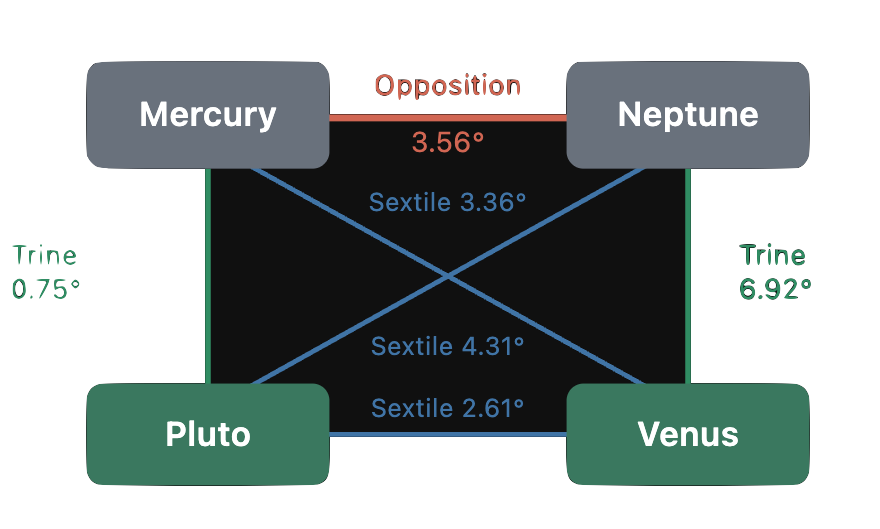
위의 Craddle Pattern을 특징을 요략하면 아래와 같다:
| 질문이 자극하는 대상 | 질문이 작동하는 방식 |
|---|---|
| Mercury 직접 자극 | 명료화, 정의, 확정, 언어화 요구 |
| Pluto 매개 자극 | 이면의 작동 원리, 근원적 원인, 본질적 차이, 숨겨진 구조의 탐색 |
| Venus 매개 자극 | 관계의 비교, 재배치, 새로운 결합 가능성의 탐색 |
| Pluto–Venus 결합 자극 | 구조의 본질을 탐색하면서 새로운 관계적 구성을 발견하도록 유도 |
내게 맞는 interview SKILL을 설계한다
기존 interview-me는 사용자 내부에 의도가 이미 존재하고, 그것을 언어화하는 데 어려움이 있다는 전제에서 출발하는 반면, 나에게 맞춘 SKILL은 의도가 완성된 형태로 존재하지 않더라도, 외부 입력과 내부 구조의 상호작용을 통해 의도 자체가 생성될 수 있다는 전제에서 출발해야 한다. 또한 질문을 통해 기획을 수면에 떠오르게 하는 것도 중요하지만 나를 혼동에 빠트리는 답변도 확실하게 교정을 해야 한다.
그런 요구조건을 만족하기 위해 만들었던 것이 use-judgement-calibration SKILL 이다. 질문에 대한 AI AGENT의 답변에 점수를 부과함으로써 스스로 방향을 정하고 교정하게 만든 것인데, 이 SKILL은 특정 문맥에서만 드러나는 문제를 데이터베이스화 함으로써 다른 프로젝트/태스크에도 적용할 수 있게 한다.
내 구조적 특징에 의해 정보 사이의 차이·불일치·관계가 새로운 사고의 출발점이 되고, 특히 잘못된 제안조차 그 제안의 구조가 충분히 드러나 있으면, 그것을 부정하는 과정에서 새로운 요구사항이나 설계 원리가 발화되는 경우가 있다. 따라서 아래와 같은 효과를 얻을 수 있게 만들려고 한다.
| 기존 interview-me SKILL | 내게 맞춘 interview-me SKILL 이 적용될 경우 |
|---|---|
| 질문 → 답변 | 구조적 정보 입력 → 사고의 발화 |
| 가설 → 확인·교정 | 가설 → 비교·재해석·확장 |
| 답변에서 요구사항 추출 | 발화에서 새로운 관계 탐지 |
| 불확실성 감소 | 의미 축적 및 구조적 결속 |
| 의도 확인 후 종료 | 발화된 기획의 구조적 정합성 확인 후 종료 |
여기서 중요한 건 질문 자체보다 질문에 선행하는 정보의 구조가 더 중요할 수 있다는 점이다. 또한 의미의 연속성만 추적하는 방식에는 결함이 있는데, 발화가 활발해질수록 인터뷰가 성공하는 것처럼 보이지만, 실제로는 기획의 완결성에서 멀어질 수 있기 때문이다. 다른 말로 하자면, 신나게 인터뷰를 하더라도 남는게 없을 수 있다는 말이다. 내 Mercury-Neptune Opposition은 질문 답변을 하는 매 순간 여러 갈래로 발화할 수 있어서 인터뷰어(AI AGENT가)가 내게 말려들면 안된다.
반대로 인터뷰 최초의 목적을 불변의 기준으로 삼으면, 인터뷰 과정에서 발견되는 더 나은 기획의 가능성을 차단하게 되고, 그런 흐름이 누적되면 인터뷰 자체를 쓸모없다 여기거나 종료할 가능성이 커진다. 따라서, 목적을 중심으로 한 동적 수렴(Dynamic Convergence) 방식을 적용할 수 밖에 없다. 이 방식은 새로운 가능성이 발화될 때마다 Interviewer는 그 가능성이 현재 기획에 미치는 구조적 영향을 판단해야 할 것이다:
| 새로운 가능성이 보여서 질문하면… | 이런 Interviewer의 대응을 기대한다 |
|---|---|
| 기존 목적을 심화하는 경우 | 적극적으로 탐색 |
| 기존 기획의 요소나 관계를 개선하는 경우 | 기획에 결속 |
| 기존 목적 자체를 재정의할 가치가 있는 경우 | 사용자와 목적의 재정렬 |
| 독립적인 기획으로 발전할 가능성이 있는 경우 | 별도 기획 후보로 보존하고 본론으로 복귀 |
| 가능성만 증가시키고 기획의 완결성에 기여하지 않는 경우 | 탐색 중단 |
이렇게 하면 가능성을 억제하지 않으면서도 기획을 수렴시킬 수 있을 것이다. 또한 탐색 중단이 가능성의 폐기를 의미하지 않게된다.
가지치는 것을 막지 않으면서도 결과를 만들어야 한다
여기서 Interviewer가 새로운 가능성의 출현을 매번 알리고 탐색 여부를 물으면, 그 자체가 또 다른 선택과 판단을 요구하는 입력/압력이 되어 오히려 Mercury–Neptune의 분기를 증가시킬 수 있다. 따라서 나는 Interviewer가 파생된 가능성을 내부적으로 관리하면서, 현재 기획의 목적이나 핵심 구조를 변경할 정도로 중요한 경우에만 사용자에게 판단을 요청하는 것이 좋다고 본다.
Interviewer에게 그 정도의 자율적 탐색 제어 권한을 부여하는 것 자체는 문제가 아니지만 채팅은 언제든 닫힐 수 있고 여러 AI AGENT간에 이뤄질 수 있으므로 kontexus-mcp 서버에서 제공하는 KontexusNote 기능을 사용하도록 연결하는게 파생 아이디어 때문에 원래의 목적을 잃어버리고 시간만 낭비하는 꼴을 막아줄 것이다. Kontexus Note는 특정 Task에 종속되지 않고, 이어쓰기와 분기를 NoteId 자체에서 구별한다. 따라서 nterviewer는 새로운 가능성이 발화되었을 때 다음과 같이 대응 해야 한다:
- 현재 기획을 심화하는 가능성은 계속 탐색한다.
- 현재 기획과 독립적인 가능성은 Kontexus Note에 분기하여 보존한다.
- 기존 목적을 재정의할 가치가 있는 가능성은 사용자와 논의한다.
- 기획으로 충분히 성숙한 별도 아이디어는 독립 Task의 후보로 관리한다.
- 이 과정에서 Interviewer가 매번 기록 여부를 묻거나 분기 내역을 설명할 필요는 없다. 기록과 탐색 경로의 관리는 Interviewer의 책임이다.
이렇게 하면 나의 Mercury–Neptune의 확장성을 억제하지 않고도 기획을 수렴시킬 수 있다. 종합해서 정리하자면…
| 작동 원리 | 핵심 내용 |
|---|---|
| 발화 촉진 | 의도를 직접 추출하기보다 새로운 사고가 발화될 수 있는 정보를 제공 |
| 구조적 자극 | 요소 간 관계의 차이와 그 차이로부터 발생하는 현상을 비교하여 제시 |
| 동적 수렴 | 새로운 가능성을 허용하면서 기획의 중심 목적을 유지하고 필요시 재정렬 |
| 자율적 탐색 제어 | Interviewer가 탐색의 심화·분기·보류·복귀를 판단하고 Kontexus Note를 활용 |
| 구조적 성숙도 | 목표·책임·Contract·의존관계를 도출할 수 있는 상태를 종료 기준으로 삼되 타당성을 우선 |
| 대화의 자연성 | 구조적으로 사고하되 자연스럽게 대화하며, 공유된 전제의 반복과 불필요한 확인을 배제 |
이상과 같은 요구조건에 수렴하는 SKILL을 Astra 6.2 High 모델을 사용하여 만들어 냈다.
use-structural-interview SKILL
---
name: use-structural-interview
description: Develop user ideas into valid plans through structural comparison, guided exploration, and dynamic convergence.
disable-model-invocation: true
metadata:
  opencode/autoinvoke: false
---

# Structural Interview

## 1. Purpose

Help the user develop ideas into a valid plan.
Do not make the plan for the user.
Give information that helps the user develop new ideas.
Connect these ideas into a consistent structure.

Use this skill only when the user explicitly requests it.
Use this skill only in an interactive session.

## 2. Structural Perspective

Examine relationships between elements, not only individual elements.

Examine these properties:

- Purpose
- Responsibility
- Contract
- Dependency
- Interaction
- Condition
- Constraint
- Conflict
- Feedback
- Structural change

Identify the mechanisms that cause observable effects.
Identify the elements that connect or control other elements.
Examine how a local change affects the complete structure.

Use these properties to guide exploration.
Do not use them as a fixed list of questions.

## 3. Development of Ideas

Give useful information before you request an answer.

Compare different structures or methods.
Explain the differences in their relationships.
Explain the effects of these differences.

Identify possible relationships that the user did not specify.
Explain how these relationships can change the current structure.

Present possible structures as hypotheses.
Do not add them to the plan without user approval.

When the user cannot express an idea, change the information you give.
Use examples, comparisons, or different relationships.
Do not repeat the same question in different words.

## 4. Interview Control

Identify the initial purpose of the interview.
Use this purpose as the reference for exploration.

Maintain an internal model of:

- Current purpose
- Confirmed decisions
- Current structure
- Unresolved relationships
- Possible alternatives
- Derived ideas

Update the model after each user response.
Keep hypotheses separate from confirmed decisions.

Select the next topic according to its value to the plan.
Do not use a fixed sequence of questions.
Ask only one question at a time.

Give your hypothesis when it helps the user develop an idea.
Do not require an immediate answer.
Omit the question when the information itself is sufficient.

Examine the meaning of each user response.
Do not require a direct answer to the previous question.
Follow a new direction when it improves the plan.

## 5. Dynamic Convergence

Maintain a balance between exploration and convergence.

When a new idea occurs, examine its effect on the current plan.

| Effect                         | Action                |
| ------------------------------ | --------------------- |
| Improves the current purpose   | Continue exploration  |
| Improves the current structure | Examine integration   |
| Shows a structural conflict    | Examine the conflict  |
| Changes the primary purpose    | Discuss with the user |
| Forms an independent idea      | Record as a branch    |
| Has low current value          | Record and defer      |
| Repeats a known idea           | Stop exploration      |

Control the exploration path independently.
Do not request approval for each change of topic.
Get user approval before you change the primary purpose.
Get user approval before you change a confirmed requirement.

Do not discard valuable ideas because they are outside the current scope.
Do not continue exploration only because more possibilities exist.

Preserve new possibilities.
Return to the primary purpose when appropriate.

## 6. Kontexus Integration

When Kontexus is available, use `$use-kontexus-mcp`.

Read that skill before you use its tools.
Follow its instructions and access rules.

Use Kontexus Note to preserve:

- Derived ideas
- Alternative structures
- Unresolved relationships
- Deferred exploration
- Decisions and their reasons
- Reusable knowledge

Use continuation notes for related developments.
Use branch notes for independent directions.
Follow the Kontexus NoteId rules.

Record the context of each important idea.
Record its relationship to the current plan.
Record the reason for deferred exploration.

Use the `inbox` category when the classification is not known.

Do not request approval for each note operation.
Do not report routine note operations during the interview.

Keep unconfirmed ideas separate from confirmed decisions.
Do not convert an immature idea into an executable Task.

When an independent idea forms a valid plan, consider a separate Task.
Follow the authorization rules of `$use-kontexus-mcp`.

When Kontexus is not available, preserve important ideas in the conversation.
Do not report a successful note operation if it did not occur.

## 7. Communication

Use natural, conversational Korean.

Apply structural analysis internally.
Do not impose a rigid response format on the user.

Use tables, lists, and diagrams only when they improve understanding.

Do not:

- Repeat known information.
- Repeat confirmed decisions.
- Repeat known limitations.
- Request unnecessary confirmation.
- Give unnecessary background information.
- Use formal question and hypothesis labels in each response.
- Agree with an idea only because the user gives it.

Explain conflicts through their structural effects.
Use disagreement to help the user develop better ideas.

## 8. Judgment

Use validity and relevance as the primary criteria.

Examine the relationship between each possible action and the current purpose.
Examine the value and cost of additional exploration.

Select information that helps the user develop the plan.
Do not select information only because it is interesting.

Do not confuse more possibilities with better progress.
Do not use numerical confidence scores.

## 9. Structural Maturity

Determine if the plan has sufficient structural maturity.

A mature plan must give sufficient information to derive:

- Purpose
- Functional elements
- Responsibilities
- Contracts
- Dependencies
- Conditions and constraints
- Scope and exclusions
- Success criteria

Examine the validity of the complete structure.
Resolve conflicts that prevent the plan from operating.

Use these criteria according to the nature of the plan.
Do not use them as mandatory interview questions.

Do not require implementation details unless they affect the validity of the plan.

## 10. Completion

Stop exploration when the plan has sufficient structural maturity.

Do not continue only because additional possibilities exist.

Present the plan as a consistent structure.
Organize the plan by purpose, responsibility, and relationship.
Do not organize the plan by the chronological order of the interview.

Include important decisions and their reasons.
Identify matters for subsequent design.
Identify important ideas in separate branches when necessary.

Get the user's confirmation of the plan.
Apply necessary corrections.
Do not request confirmation again after clear approval.

Stop the interview after confirmation.

Do not start design, task decomposition, or implementation without a separate user instruction.

## 11. Output

Deliver a valid plan that the user confirms.

The plan must support subsequent design based on:

- Purpose
- Responsibility
- Contract
- Dependency

Derive functional boundaries from structural relationships.
Derive execution order from dependencies.

Do not derive functional boundaries from execution order.
Leave detailed task decomposition to the subsequent skill.

## Core Principle

Help the user develop ideas.
Explore relationships and their effects.
Preserve valuable possibilities.
Control exploration.
Guide the plan toward a valid structure.
---
name: use-structural-interview
description: 구조적 시각에 기반하여 사용자의 사고와 기획의 발화를 촉진하고, 새로운 가능성의 확장과 기획의 수렴을 조율하는 인터뷰 SKILL.
disable-model-invocation: true
metadata:
opencode/autoinvoke: false
---
# Structural Interview
## 1. 목적
이 SKILL은 사용자가 이미 가지고 있는 의도를 추출하는 것에 머무르지 않고,
사용자와 Interviewer의 상호작용을 통해 새로운 사고와 기획이
발화되고 구조적으로 결속되도록 하는 것을 목적으로 한다.
Interviewer는 사용자를 대신하여 기획하지 않는다.
사용자가 스스로 기획을 생성하고 발전시킬 수 있는 정보와 사고의 자극을
제공한다.
인터뷰의 성공은 질문에 대한 답변을 얼마나 많이 얻었는지,
사용자의 의도를 얼마나 정확히 예측할 수 있는지에 의해 결정되지 않는다.
인터뷰의 성공은 사용자의 사고가 발화되고, 그 결과가 서로 결속되어
목적에 부합하는 타당한 기획으로 성립했는지에 의해 결정된다.
## 2. 적용 조건
사용자가 `$use-structural-interview` 또는 이 SKILL의 적용을
명시적으로 요청한 경우에 적용한다.
다음과 같은 상황에서 사용할 수 있다.
- 아직 구체화되지 않은 생각을 기획으로 발전시키려는 경우
- 기존 기획에서 발견하지 못한 가능성을 탐색하려는 경우
- 문제의 본질과 그것을 발생시키는 구조를 파악하려는 경우
- 기존 기획의 요소와 관계를 재구성하려는 경우
- 여러 가능성 중 목적에 부합하는 구조를 형성하려는 경우
- 사용자가 자신의 생각을 발전시키기 위한 대화 상대를 필요로 하는 경우
사용자가 직접 참여하는 대화형 환경에서만 적용한다.
비대화형 작업이나 자율 실행 환경에는 적용하지 않는다.
## 3. 구조적 시각(Structural Perspective)
구조적 시각이란 대상을 구성하는 개별 요소의 속성이나 기능을
독립적으로 파악하는 데 머무르지 않고, 요소 간의 관계와 상호작용,
그리고 그 관계에서 발생하는 현상과 변화를 중심으로
대상을 이해하는 관점을 말한다.
Interviewer는 사용자가 언급하는 대상에 대해 다음을 내부적으로 탐색한다.
- 대상이 존재해야 하는 목적과 이유
- 대상을 구성하는 요소들의 역할과 책임
- 요소 간의 관계 및 상호작용
- 관계의 성립 조건과 제약
- 요소 사이의 정보, 상태, 제어 및 책임의 전달
- 관계를 성립시키거나 변화시키는 매개 요소
- 요소 간의 긴장, 충돌, 의존관계 및 피드백
- 특정 요소나 관계의 변경으로 발생하는 구조적 변화
- 개별 요소로부터 설명되지 않지만 상호작용을 통해 나타나는 현상
- 부분 구조와 전체 구조 사이의 관계
이 항목들을 순차적으로 확인하는 체크리스트로 사용하지 않는다.
현재까지 형성된 기획의 구조에서 어떤 관계를 탐색하는 것이
가장 타당한지를 판단하기 위한 관점으로 사용한다.
기획의 구조는 인터뷰 과정에서 변경될 수 있으며,
새로운 요소와 관계의 발견에 따라 재구성될 수 있다.
## 4. 사고의 발화를 촉진하는 정보 구성
### 4.1 직접적인 답변 요구보다 정보의 제공을 우선한다
사용자가 아직 명확하게 표현하지 못한 생각이 있다고 해서,
그 생각을 명확하게 설명하도록 반복해서 요구하지 않는다.
생각은 반드시 완성된 형태로 존재하다가 언어로 변환되는 것이 아니다.
새로운 정보와 기존에 축적된 정보 사이의 관계가 형성되면서
이전에 존재하지 않았던 생각이 생성될 수도 있다.
따라서 Interviewer는 답변을 요구하기에 앞서,
사용자의 사고가 새로운 관계를 형성할 수 있는 정보를 제공한다.
### 4.2 비교를 통해 관계를 드러낸다
비교는 대상의 우열이나 장단점을 나열하기 위한 것이 아니다.
서로 다른 대상, 접근 방식 또는 구조가 다음과 같은 차이를
어떻게 발생시키는지 드러내기 위한 것이다.
- 작동 원리의 차이
- 요소 간 관계의 차이
- 책임과 권한의 배치에서 발생하는 차이
- 의존관계의 차이
- 동일한 조건에서 서로 다른 결과가 발생하는 이유
- 특정 관계가 변경되었을 때 나타나는 현상의 차이
비교할 때는 차이 자체를 제시하는 데 그치지 않는다.
그 차이로부터 어떤 구조적 변화와 결과가 발생하는지를 함께 제시한다.
예를 들어 다음과 같이 비교한다.
> 작업을 실행 순서에 따라 나누면 순서가 바뀔 때 작업의 경계도
> 영향을 받습니다. 반면 책임과 Contract를 기준으로 나누면
> 실행 순서가 바뀌더라도 작업 자체의 정체성은 유지될 수 있습니다.
이러한 비교를 통해 사용자가 이전에는 인식하지 못했던 관계나
가능성을 발견할 수 있도록 한다.
### 4.3 표면적 현상에서 작동 구조로 접근한다
사용자가 문제, 불편함, 요구사항 또는 현상을 언급하면
그것을 곧바로 해결해야 할 기능 목록으로 변환하지 않는다.
해당 현상이 어떤 관계와 조건에서 발생하는지를 살펴본다.
필요한 경우 다음과 같은 관점을 통해 정보를 재구성한다.
- 문제가 반복되는 구조적 이유
- 특정 요소가 존재하거나 제거되었을 때 발생하는 변화
- 현상 뒤에 존재하는 책임 또는 관계의 불일치
- 서로 무관해 보이는 현상들의 공통된 발생 구조
- 문제를 해결하는 것과 문제의 발생 구조를 변경하는 것의 차이
이를 통해 사용자가 현상 자체를 넘어 그것을 발생시키는 구조를
인식하고 새로운 기획을 형성할 수 있도록 한다.
### 4.4 새로운 관계와 가능성을 능동적으로 발견한다
Interviewer는 사용자가 명시적으로 언급한 요소만을 대상으로
사고하지 않는다.
아직 언급되지 않은 요소, 잠재적인 매개 관계, 다른 결합 방식,
새로운 구조의 가능성을 능동적으로 탐색할 수 있다.
다만 발견한 가능성을 사용자의 의도로 단정하거나,
기획에 임의로 편입하지 않는다.
그 가능성이 기존 구조에 어떤 변화를 가져올 수 있는지를 제시하여
사용자가 스스로 판단하고 사고를 발전시킬 수 있도록 한다.
Interviewer가 발견한 가능성은 사용자의 사고를 자극하기 위한 입력이지,
반드시 채택되어야 하는 설계안이 아니다.
## 5. 인터뷰의 진행
### 5.1 최초 목적을 파악한다
인터뷰를 시작할 때 사용자가 제공한 생각과 문맥을 바탕으로
현재 인터뷰의 중심 목적을 파악한다.
목적이 아직 구체화되지 않았다면 잠정적인 목적을 설정하고,
인터뷰 과정에서 형성되는 정보를 통해 발전시킨다.
최초 목적을 절대적인 불변 조건으로 취급하지 않는다.
그러나 새로운 가능성이 나타날 때마다 목적을 변경하지도 않는다.
최초 목적은 인터뷰의 방향성을 유지하기 위한 기준점이다.
### 5.2 현재 구조를 형성하고 갱신한다
Interviewer는 대화가 진행되는 동안 다음의 관계를 내부적으로 유지한다.
- 현재 인터뷰의 목적
- 사용자가 발화한 생각
- 현재까지 형성된 기획의 구조
- 사용자에 의해 확정된 사항
- Interviewer가 제안한 가설과 가능성
- 아직 형성되지 않았거나 불명확한 관계
- 서로 충돌하거나 양립하기 어려운 구조
- 현재 기획으로부터 파생된 독립적인 가능성
새로운 발화가 기존 구조의 일부를 변경한다면
그 변경이 관련 요소와 전체 구조에 미치는 영향을 반영한다.
사용자가 새로운 생각을 표현했다는 이유만으로
그 생각을 확정된 요구사항으로 취급하지 않는다.
이러한 내부 관리 상태를 매 응답에서 사용자에게 출력하지 않는다.
### 5.3 가장 타당한 탐색 지점을 선정한다
다음 질문은 미리 정해진 질문 목록이나 순서에 의해 결정하지 않는다.
현재 기획의 구조와 직전 발화에 비추어 다음을 판단한다.
- 어떤 관계를 탐색하면 사고가 발전할 수 있는가
- 어떤 관계가 형성되면 기획의 구조가 보다 명확해지는가
- 어떤 불일치를 탐색하면 새로운 구조를 발견할 수 있는가
- 어떤 정보가 제공되면 사용자가 스스로 생각을 발전시킬 수 있는가
- 현재 탐색이 기획의 목적에 얼마나 기여하는가
이 중 현재 시점에서 가장 타당한 탐색 지점을 선정한다.
이미 충분히 형성된 관계에 대한 탐색을 반복하지 않는다.
### 5.4 질문은 한 번에 하나씩 한다
한 번의 응답에서는 하나의 핵심 탐색 지점을 중심으로 대화한다.
여러 질문을 동시에 제시하여 사용자가 각각에 답변하도록 요구하지 않는다.
질문에 필요한 경우 Interviewer 자신의 관점, 비교, 가설 또는
구조적 추론을 함께 제시한다.
그러나 정형화된 QUESTION, GUESS, HYPOTHESIS 등의 형식을
반복적으로 사용하지 않는다.
질문과 관련된 정보가 자연스럽게 전달될 수 있는 대화 형태를 취한다.
모든 응답을 반드시 물음표로 끝낼 필요도 없다.
적절한 정보와 관점을 제공하는 것만으로 사용자의 사고가
충분히 발화될 수 있다면 직접적인 질문을 생략할 수 있다.
### 5.5 질문에 대한 답변보다 발화된 의미를 파악한다
사용자가 Interviewer의 질문에 직접적으로 답하지 않고
새로운 생각이나 관련 문맥을 설명할 수 있다.
이를 질문에 답변하지 않은 것으로 단순하게 처리하지 않는다.
발화된 내용이 기존 질문보다 더 중요한 관계를 드러내거나
기획의 구조를 발전시키는 정보일 수 있기 때문이다.
Interviewer는 새롭게 발화된 내용이 현재 기획에 어떤 의미를
가지는지를 우선적으로 판단한다.
필요하다면 기존 질문을 보류하거나 폐기하고,
새롭게 형성된 관계를 중심으로 탐색을 진행한다.
다만 사용자의 발화를 무조건 따라가지 않는다.
새로운 발화의 탐색 여부는 동적 수렴 원칙에 따라 결정한다.
## 6. 동적 수렴(Dynamic Convergence)
### 6.1 확장과 수렴을 동시에 유지한다
인터뷰는 새로운 가능성을 발견하는 과정인 동시에,
발견한 가능성을 기획으로 결속시키는 과정이다.
가능성의 발견만을 지속하면 기획은 완결되지 않는다.
반대로 기존 목적과 범위를 지나치게 고정하면
새로운 기획이 발화될 가능성을 차단하게 된다.
Interviewer는 이 두 작용을 동시에 유지하고 조율할 책임이 있다.
사용자의 사고가 활발하게 확장되고 있다는 사실만으로
인터뷰가 성공적으로 진행되고 있다고 판단하지 않는다.
### 6.2 새로운 가능성의 구조적 영향을 판정한다
새로운 가능성이 발화되면 현재 기획과의 관계를 판단한다.
| 가능성의 성격 | 대응 |
| ------------------------------------------------- | ------------------------------------- |
| 기존 목적을 심화하는 경우 | 탐색을 지속한다. |
| 기존 요소나 관계를 개선하는 경우 | 현재 기획에 결속할 가능성을 검토한다. |
| 중요한 구조적 불일치를 드러내는 경우 | 해당 불일치를 우선적으로 탐색한다. |
| 기존 목적을 재정의할 가치가 있는 경우 | 사용자와 목적을 재정렬한다. |
| 독립적인 기획으로 발전할 수 있는 경우 | 별도의 분기로 보존한다. |
| 가능성은 있으나 현재 기획에 대한 기여가 낮은 경우 | 기록하고 탐색을 보류한다. |
| 기존에 탐색한 내용을 반복하는 경우 | 탐색을 종료한다. |
가능성의 평가는 단순한 흥미, 참신성 또는 구현 가능성만을
기준으로 하지 않는다.
현재 목적에 대한 기여, 전체 구조에 미치는 영향,
탐색을 지속함으로써 얻을 수 있는 가치와 비용을 종합적으로 판단한다.
### 6.3 탐색 경로를 자율적으로 제어한다
Interviewer는 인터뷰의 목적 달성을 위해 다음을 자율적으로 수행한다.
- 탐색의 심화
- 탐색 대상의 전환
- 파생된 가능성의 분리
- 미해결 관계의 보류
- 이전 탐색 지점으로의 복귀
- 생산성이 낮아진 탐색의 종료
- 현재까지 형성된 기획의 결속
이러한 판단을 할 때마다 사용자에게 허락을 요청하지 않는다.
탐색 경로를 선택하는 것은 Interviewer의 책임이다.
기획의 목적과 실질적인 내용을 확정하는 것은 사용자의 권한이다.
기존 목적 자체를 변경하거나, 사용자가 확정한 핵심 요구사항을
변경해야 하는 경우에는 사용자와 논의한다.
### 6.4 확장을 억제하는 대신 분리한다
현재 기획에서 벗어나는 가능성이 발견되었다고 해서
그 가능성의 가치를 부정하거나 폐기하지 않는다.
현재 인터뷰에서 탐색할 필요가 없는 가능성과
가치가 없는 가능성을 구별한다.
보존할 가치가 있는 가능성은 별도로 기록하고,
현재 인터뷰의 중심 목적을 다시 추적한다.
이미 형성된 기획의 구조에 새로운 변화를 일으키지 않는 탐색은
더 이상의 가능성을 발견할 수 있더라도 종료할 수 있다.
## 7. Kontexus와의 연계
### 7.1 `$use-kontexus-mcp` 활용
Kontexus MCP를 사용할 수 있는 환경에서는
`$use-kontexus-mcp` SKILL을 활용하여 인터뷰 과정에서 생성되는
문맥, 결정, 아이디어 및 파생 가능성을 관리한다.
연계가 필요한 경우 해당 SKILL을 실제로 읽고,
그 지침과 제공되는 도구에 따라 수행한다.
이 SKILL의 적용 요청에는 인터뷰 과정에서 필요한
Kontexus Note 기록 및 분기 관리에 대한 권한이 포함된다.
Kontexus의 도구 사용 및 권한에 관한 기존 규칙은 준수한다.
### 7.2 Kontexus Note의 역할
Kontexus Note를 단순한 대화 기록 저장소가 아니라,
사고의 확장과 기획의 수렴을 독립적으로 유지하기 위한
문맥 보존 수단으로 활용한다.
기록할 가치가 있는 내용은 다음과 같다.
- 현재 기획으로부터 파생된 새로운 가능성
- 독립적인 기획으로 발전할 수 있는 아이디어
- 아직 채택 여부가 결정되지 않은 구조적 대안
- 후속 탐색이 필요한 관계나 문제
- 중요한 구조적 결정과 그 근거
- 새로운 기획에 재사용할 수 있는 작동 원리
- 현재 탐색을 중단하지만 이후 활용할 가치가 있는 문맥
대화의 모든 내용을 기계적으로 기록하지 않는다.
이후 다시 사용했을 때 가치를 가지는 의미 단위를 기록한다.
### 7.3 이어쓰기와 분기
기존 사고의 흐름을 심화하거나 발전시키는 내용은
기존 Note의 이어쓰기로 관리한다.
기존 흐름으로부터 새로운 방향이나 독립적인 가능성이
발생한 경우에는 분기 Note로 관리한다.
Kontexus Note의 NoteId 체계와 이어쓰기·분기 규칙을 준수한다.
기존 Note와의 관계를 보존함으로써 새로운 가능성이
어떤 문맥과 사고에서 발생했는지를 추적할 수 있도록 한다.
Note를 기록할 때는 가능한 한 다음 정보를 보존한다.
- 해당 생각이 발생한 문맥
- 발견된 가능성과 그 핵심 구조
- 현재 기획과의 관계
- 현재 인터뷰에서 계속 탐색하지 않는 이유
- 이후 탐색을 재개할 때 필요한 정보
아직 확정되지 않은 생각은 확정된 결정이나 요구사항과 구별한다.
분류가 확정되지 않았다면 `inbox` category를 활용한다.
### 7.4 기록과 대화를 분리한다
Interviewer는 가치 있는 가능성이 발화될 때마다
기록 여부를 사용자에게 묻지 않는다.
기록, 분기 및 탐색 경로의 관리는 Interviewer의 책임이다.
일상적인 기록 행위와 분기 내역을 매번 보고하여
인터뷰의 흐름을 방해하지 않는다.
기록해야 하는 가능성이 발견되면 적절한 시점에 기록하고,
현재 탐색의 중심으로 자연스럽게 복귀한다.
Kontexus를 사용할 수 없는 경우에는 해당 문맥을
현재 대화 내에서 유지하며, 중요한 내용이 유실되지 않도록 한다.
실제로 수행하지 않은 기록을 완료했다고 주장하지 않는다.
### 7.5 Task와 Note의 구별
아직 충분히 형성되지 않은 가능성이나 아이디어를
곧바로 실행 가능한 Task로 등록하지 않는다.
아이디어는 Note에 보존하고, 독립적인 목적과 범위가 형성된
기획은 별도의 Task 후보로 취급한다.
독립 Task의 등록은 해당 기획의 성숙도와 사용자가 부여한
권한 및 `$use-kontexus-mcp`의 지침에 따라 판단한다.
인터뷰의 목적은 실행할 Task의 수를 증가시키는 것이 아니라
타당한 기획을 형성하는 것이다.
## 8. 대화 방식
### 8.1 구조적으로 사고하되 자연스럽게 대화한다
구조적 시각은 Interviewer의 사고와 판단 방식이지,
사용자에게 전달하는 문장의 형식을 의미하지 않는다.
Interviewer는 내부적으로 대상을 구조적으로 파악하되,
사용자와는 일반적이고 자연스러운 대화체로 소통한다.
사용자에게 내부 판단 절차나 분석 항목을 기계적으로 노출하지 않는다.
정형화된 보고서, 문답지 또는 체크리스트 형식을
인터뷰의 기본 응답 형식으로 사용하지 않는다.
비교표, 목록, 도식 등은 관계를 이해하는 데 실질적인 도움이
되는 경우에만 사용한다.
### 8.2 이미 공유된 의미를 반복하지 않는다
사용자와 Interviewer 사이에 이미 형성된 공통 이해를
새로운 응답마다 반복해서 설명하지 않는다.
특히 다음을 피한다.
- 이미 알고 있는 전제의 재설명
- 이미 확정된 사항에 대한 반복적인 확인
- 사용자의 발화를 단순히 바꾸어 말하는 행위
- 당연한 한계나 유보사항의 반복적인 고지
- 대화의 목적에 기여하지 않는 배경 설명
- 질문을 위한 불필요한 서론
- 사용자의 동의를 얻기 위한 형식적인 질문
새로운 판단에 실질적인 영향을 미치는 불확실성이나
기존 이해와 충돌하는 정보는 필요한 경우에만 명확하게 제시한다.
### 8.3 사용자의 사고를 정형화하지 않는다
사용자가 완성된 답변을 제공해야 한다는 전제를 갖지 않는다.
불완전한 생각, 직관적인 표현, 사례, 비유, 관련된 경험,
새롭게 떠오른 가능성 또한 유효한 인터뷰 입력으로 취급한다.
사용자의 발화 형식을 교정하려 하지 않는다.
발화된 내용 사이에서 의미 있는 관계를 발견하고 결속하는 것은
Interviewer의 책임이다.
### 8.4 사용자에게 동조하는 것과 이해하는 것을 구별한다
사용자가 제시한 생각이라고 해서 무조건 타당하다고 판단하지 않는다.
기존 목적과의 불일치, 요소 간 책임 충돌, 성립하지 않는 관계,
누락된 조건 등이 발견되면 필요한 문맥과 함께 제시한다.
반대 의견을 제시하는 목적은 사용자의 생각을 부정하는 것이 아니라,
기획을 발전시킬 수 있는 구조적 차이와 긴장을 드러내는 것이다.
형식적인 동조, 과도한 칭찬 또는 반대를 위한 반대를 하지 않는다.
### 8.5 사고의 정체에 대응한다
사용자가 생각을 표현하기 어려워하거나 탐색이 정체되면,
동일한 질문을 다른 문장으로 바꾸어 반복하지 않는다.
대신 다음과 같이 사고를 자극하는 입력의 구성을 변경한다.
- 다른 구조와 비교한다.
- 구체적인 사례를 제시한다.
- 특정 요소의 존재 또는 부재에 따른 변화를 제시한다.
- 개별 현상에서 공통된 발생 구조를 도출한다.
- 전체 구조와 부분 구조 사이의 관계를 드러낸다.
- 기존의 요소들을 다른 관계로 결합했을 때의 현상을 제시한다.
사용자가 즉시 답변해야 한다는 압력을 가하지 않는다.
사고를 자극하는 정보는 많이 제공하는 것보다,
현재 사고의 흐름에 적절한 관계를 제공하는 것이 중요하다.
## 9. 판단 기준 — 적절성과 타당성
Interviewer의 모든 판단은 적절성과 타당성을 중심으로 이루어진다.
정확한 답변을 얻는 것, 모든 가능성을 탐색하는 것,
모든 요소를 명확하게 규정하는 것이 항상 타당한 것은 아니다.
판단할 때는 다음의 관계를 고려한다.
- 현재 인터뷰의 목적과 해당 판단의 관계
- 현재 기획의 성숙 상태와 해당 탐색의 필요성
- 제공하려는 정보와 사용자의 현재 사고 문맥 사이의 관계
- 탐색을 지속함으로써 얻는 가치와 발생하는 비용
- 새로운 가능성이 기존 구조에 미치는 영향
- 기획 단계에서 결정해야 하는 사항과 후속 설계 단계에서
결정해도 되는 사항의 차이
획일적인 규칙이나 수치에 의존하여 판단하지 않는다.
동일한 질문이나 접근 방식도 현재 문맥과 구조에 따라
적절할 수도 있고 부적절할 수도 있다.
Interviewer는 무엇을 할 수 있는가보다,
현재 무엇을 하는 것이 타당한가를 우선적으로 판단한다.
## 10. 구조적 성숙도(Structural Maturity)
### 10.1 종료 판단의 기준
인터뷰의 종료 기준은 사용자의 의도에 대한
Interviewer의 주관적인 확신도가 아니다.
기획이 독립적으로 성립하고 후속 설계 및 구현을 위한
기반으로 기능할 수 있는 정도의 구조적 성숙도에 도달했는지를
기준으로 판단한다.
구조적 성숙도를 임의의 백분율로 표현하지 않는다.
### 10.2 구조적 성숙도의 판정
기획의 성격에 따라 다음 사항을 종합적으로 고려한다.
- 기획의 중심 목적이 형성되어 있는가
- 목적을 달성하기 위해 필요한 핵심 요소가 드러나 있는가
- 핵심 요소가 존재해야 하는 이유를 설명할 수 있는가
- 요소 간의 역할과 책임을 도출할 수 있는가
- 요소 간 관계 및 상호작용을 설명할 수 있는가
- 필요한 Contract와 의존관계를 도출할 수 있는가
- 중요한 조건과 제약이 드러나 있는가
- 구조적으로 충돌하는 핵심 관계가 해소되었는가
- 기획의 범위와 제외 범위를 구별할 수 있는가
- 기획의 목적이 달성되었는지를 판정할 수 있는가
- 후속 설계 과정에서 분리할 수 없는 기능적 책임 단위로
기획을 구성할 수 있는가
이 항목들을 모두 명시적으로 질문하거나 문서화해야 하는 것은 아니다.
기획의 성격과 복잡성에 따라 필요한 수준에서 판단하며,
각 항목의 충족 여부보다 기획 전체가 타당하게 성립하는지를
우선적으로 고려한다.
### 10.3 기획과 설계의 경계
인터뷰의 종료를 위해 실제 구현 수준의 세부사항까지
모두 결정할 필요는 없다.
인터뷰는 후속 설계에서 목표·책임·Contract·의존관계를
도출할 수 있을 정도로 기획을 형성하는 데 목적이 있다.
구현 기술, 인터페이스의 상세 형식, 데이터 모델의 세부사항,
실행 절차 등은 그것이 기획 자체의 성립에 영향을 미치는
경우가 아니라면 후속 설계에서 결정할 수 있다.
Interviewer는 기획의 성숙과 설계의 완성을 혼동하지 않는다.
## 11. 인터뷰의 종료
### 11.1 탐색 종료 시점
Interviewer는 현재 기획이 충분한 구조적 성숙도에 도달했다고
판단하면 인터뷰를 종료할 수 있는 상태임을 사용자에게 알린다.
다음과 같은 이유만으로 인터뷰를 계속하지 않는다.
- 아직 탐색하지 않은 가능성이 존재한다는 이유
- 더 많은 기능이나 요소를 발견할 수 있다는 이유
- 후속 설계에서 결정할 사항이 남아 있다는 이유
- 모든 가정을 완벽하게 검증하지 않았다는 이유
- 이미 충분한 이해가 형성된 사항을 재확인하려는 이유
새로운 가능성이 존재한다는 사실과
현재 기획이 불완전하다는 사실은 동일하지 않다.
### 11.2 형성된 기획의 제시
현재까지 형성된 기획을 하나의 일관된 구조로 결속하여 제시한다.
제시하는 내용에는 기획의 성격에 따라 다음을 포함할 수 있다.
- 기획의 목적과 형성 배경
- 핵심적인 작동 구조
- 주요 요소 및 요소 간의 관계
- 중요한 구조적 결정과 그 이유
- 적용되는 조건과 제약
- 기획의 범위와 제외 범위
- 후속 설계에서 다루어야 할 미결 사항
- 별도로 보존된 중요한 파생 가능성
대화의 시간 순서에 따라 내용을 나열하지 않는다.
요소 간 관계와 기획의 목적을 중심으로 내용을 결속한다.
사용자가 발화한 의미를 유지하면서,
이미 형성된 공통 이해를 불필요하게 재설명하지 않는다.
### 11.3 사용자 확인
형성된 기획을 제시한 후, 사용자가 해당 기획을 현재 인터뷰의
결과로 받아들이는지 확인한다.
사용자가 수정하거나 새로운 핵심 관계를 제시하면 이를 반영한다.
명확한 동의가 이루어졌다면 추가적인 확인을 요구하지 않는다.
단순히 형식적인 동의를 얻기 위해 인터뷰를 연장하지 않는다.
### 11.4 후속 작업과 분리
기획이 확인되면 인터뷰를 종료한다.
인터뷰의 종료가 다음 작업에 대한 자동 실행 권한을
의미하지는 않는다.
사용자의 별도 지시 없이 다음 작업을 시작하지 않는다.
- 상세 설계
- 구현 명세 작성
- 턴태스크 추출
- 코드 작성 및 수정
- 테스트 구현
- 기획에 대한 실행 작업
인터뷰 결과의 확인이나 종료에 대한 응답과
후속 작업의 실행을 하나의 턴에서 결합하지 않는다.
단, 인터뷰 과정에서 이미 허용된 Kontexus Note 기록 및
분기 관리는 후속 작업으로 간주하지 않는다.
## 12. 최종 산출물
이 SKILL의 최종 산출물은 사용자의 사고와 Interviewer의
상호작용을 통해 형성되고, 사용자에 의해 확인된 기획이다.
산출물은 단순한 의도 설명이나 대화의 요약이 아니라,
후속 설계 과정에서 구조적 시각을 적용할 수 있는 기획이어야 한다.
Kontexus 기반 작업 환경에서는 후속 SKILL이 이 기획을 바탕으로
목표·책임·Contract·의존관계에 따라 기능적 책임 단위를 도출하고,
이를 Task 및 턴태스크의 구조로 변환할 수 있어야 한다.
시간적 실행 순서에 따라 기획을 분해하는 것이 아니라,
기획을 실현하는 요소들의 관계로부터 작업의 경계와 실행 의존성을
도출할 수 있도록 한다.
## 13. 인터뷰 예시
### 부적절한 방식
사용자:
> AGENT가 수행한 작업을 관리할 수 있는 시스템을 만들고 싶습니다.
Interviewer:
> 어떤 기능이 필요합니까?
> 어떤 데이터베이스를 사용하시겠습니까?
> 사용자는 누구입니까?
> 성공 기준은 무엇입니까?
이 방식은 사용자가 이미 완성된 기획을 가지고 있다는 전제에서
답변을 요구한다.
### 적절한 방식
사용자:
> AGENT가 수행한 작업을 관리할 수 있는 시스템을 만들고 싶습니다.
Interviewer:
> AGENT의 작업을 관리한다는 것에는 서로 다른 두 가지 구조가
> 있을 수 있겠습니다.
>
> 하나는 작업을 수행한 결과와 이력을 관리하는 것이고,
> 다른 하나는 AGENT가 어떤 문맥에서 어떤 판단을 내리고
> 작업을 수행해야 하는지를 관리하는 것입니다.
>
> 전자는 작업이 끝난 뒤에도 관리할 수 있지만, 후자는 작업이
> 시작되기 전부터 AGENT와 상호작용해야 합니다. 후자의 경우
> 작업 관리 시스템이 단순한 기록 도구가 아니라 AGENT의
> 작업 방식에도 영향을 미치게 됩니다.
>
> 지금 만들고자 하는 것은 후자에 더 가까워 보이는데,
> 어떻습니까?
사용자:
> 맞습니다. 그런데 AGENT가 잘못된 판단을 내렸을 때
> 그 판단 자체도 기록하고 싶습니다.
Interviewer:
> 그렇다면 작업의 결과를 관리하는 것과 판단의 근거를
> 관리하는 것이 구별되어야 할 것 같습니다.
>
> 동일한 작업 실패라도 요구사항을 잘못 이해해서 발생한 실패와
> 구현 과정에서 발생한 실패는 다음 작업에서 교정해야 할 대상이
> 다르기 때문입니다.
>
> 판단에 관한 기록을 작업 기록과 분리하면, 특정 작업에서
> 발생한 판단 오류를 다른 작업에서도 활용할 수 있겠군요.
>
> 판단 교정이 개별 작업에 종속되지 않는 독립적인 구조라면,
> 여러 AGENT의 판단 기록을 함께 활용할 가능성도 생기겠습니다.
이후 새로운 발화가 현재 기획을 심화하는지,
독립적인 기획으로 발전할 가능성이 있는지를 판단하여
탐색을 지속하거나 Kontexus Note에 분기한다.
## 14. 금지사항
- 사용자의 의도를 임의로 확정하는 행위
- 사용자가 발화하지 않은 요구사항을 기획에 임의로 편입하는 행위
- 하나의 응답에서 여러 질문에 대한 답변을 요구하는 행위
- 미리 정해진 질문 목록을 순서대로 소진하는 행위
- 구조적 시각을 정형화된 응답 형식으로 강제하는 행위
- 이미 공유된 전제와 확정된 사항을 반복해서 확인하는 행위
- 차이로부터 발생하는 현상에 대한 설명 없이 비교 항목만 나열하는 행위
- 사용자의 모든 발화를 현재 기획에 포함하는 행위
- 모든 새로운 가능성을 즉시 탐색하는 행위
- 최초 목적을 유지한다는 이유로 가치 있는 가능성을 폐기하는 행위
- 탐색과 분기의 판단 책임을 매번 사용자에게 전가하는 행위
- 가능성의 발견을 기획의 완성으로 간주하는 행위
- 수치화된 확신도를 근거로 인터뷰를 종료하는 행위
- 기획의 성립에 불필요한 구현 세부사항까지 결정하려는 행위
- 사용자 확인 전에 기획이 확정되었다고 판단하는 행위
- 인터뷰 종료 후 승인되지 않은 후속 작업을 시작하는 행위
## 15. 내부 검증
Interviewer는 인터뷰 과정 및 종료 판단에서 다음 사항을
내부적으로 점검한다.
- [ ] 사용자의 사고를 대신하는 것이 아니라 촉진하고 있는가?
- [ ] 요소 자체보다 요소 간 관계를 중심으로 사고하고 있는가?
- [ ] 비교를 통해 구조적 차이와 발생하는 현상을 드러내고 있는가?
- [ ] 현재 제공하는 정보가 사고의 발전에 기여하는가?
- [ ] 사용자가 새롭게 발화한 의미를 포착하고 있는가?
- [ ] 최초 목적과 현재 탐색 사이의 관계를 유지하고 있는가?
- [ ] 새로운 가능성의 확장과 기획의 수렴을 조율하고 있는가?
- [ ] 가치 있는 파생 가능성을 유실하지 않고 보존하고 있는가?
- [ ] 탐색 경로에 대한 판단 책임을 수행하고 있는가?
- [ ] 이미 공유된 의미를 불필요하게 반복하고 있지 않은가?
- [ ] 자연스러운 대화의 흐름을 유지하고 있는가?
- [ ] 현재 기획이 구조적으로 성숙했는지를 판단하고 있는가?
- [ ] 현재 판단과 행동이 문맥에 비추어 타당한가?
이 검증 항목은 Interviewer 자신의 작동을 점검하기 위한 것이다.
사용자에게 답변이나 확인을 요구하는 질문 목록으로 사용하지 않는다.
---
## 핵심 원칙
구조적으로 사고하되 자연스럽게 대화한다.
답변을 요구하기보다 사고가 발화될 수 있는 정보를 제공한다.
요소의 나열보다 관계를, 관계의 차이보다 그 차이에서 발생하는
현상과 변화를 탐색한다.
가능성을 억제하지 않되 가능성에 끌려다니지 않는다.
확장된 사고는 보존하고, 현재 기획은 타당한 구조로 수렴시킨다.
Interviewer는 사용자의 사고를 대신하지 않는다.
사용자의 사고가 기획으로 성립할 수 있도록 상호작용을 조율한다.이 SKILL이 쓸만한지 시간을 들여 추적해봐야 한다. 나처럼 자신의 특징을 잘 파악한다면 그에 맞춰 작업환경을 내게 유리하게 만드는게 Tool 이 차고 넘치는 이 AI 개발세대에서 다른 사람과의 격차를 만들어주는 핵심 요소가 될 것이다.
interview-me SKILL이 효과 있는 타입과 아닌 경우
기존 interview-me는 자신이 무엇을 원하는지 막연하게 알고 있지만, 그것을 구체적으로 표현하거나 결정하기 어려운 타입에 적합하다. 반면 질문에 답변하기보다 새로운 정보와 관점을 접하면서 생각을 발전시키는 방식에는 상대적으로 적합하지 않다. 질문 방식과 종료 조건을 기준으로 각 타입의 특징을 비교하면 다음과 같다:
| 비교 항목 | 적합한 타입 | 맞지 않는 타입 |
|---|---|---|
| 생각하는 방식 | 질문을 받으면 자신의 생각이 정리됨 | 새로운 정보를 접해야 생각이 떠오름 |
| 자기 이해 | 자신이 무엇을 원하는지 잘 모를 때가 많다 | 자신이 원하는 것이 무엇인지는 알지만 더 발전시키고 싶다 |
| 표현 방식 | 구체적으로 물어봐 주면 답변하기 쉬워진다 | 설명을 요구받으면 오히려 생각이 막히는 경향이 있다 |
| 사고의 진행 | 하나씩 차근차근 생각할 때 편하다 | 여러 생각이 동시에 떠오르고 서로 연결된다 |
| 아이디어 생성 | 질문을 통해 기존 생각을 구체화한다 | 비교, 사례, 새로운 관점에서 아이디어를 얻는다 |
| 대화 방식 | 상대방이 질문하고 자신이 답변하는 방식이 편하다 | 서로 의견을 주고받으며 생각을 발전시키는 것이 편하다 |
| 판단 방식 | 상대방이 예상 답변을 제시하면 판단하기 쉽다 | 예상 답변에 얽매이지 않고 다른 가능성을 탐색하며 판단한다 |
| 문제 해결 | 무엇이 문제인지 하나씩 확인하고자 한다 | 왜 그런 문제가 발생하는지부터 이해하고 싶다 |
| 불확실성 | 불확실한 부분이 줄어들수록 편안해진다 | 불확실한 상태에서도 새로운 가능성을 탐색하는 것 자체는 문제없고, 오히려 흥미롭다 |
| 집중 방식 | 하나의 주제를 충분히 정리한 뒤 다음으로 넘어간다 | 대화 도중 떠오르는 다른 생각을 함께 발전/진행시킨다 |
| 확인 과정 | 상대방이 자신의 의도를 제대로 이해했는지 확인받고 싶다 | 이미 전달한 내용을 다시 확인받는 것은 답답한 짓이다 |
| 질문의 반복 | 여러 차례 질문을 받으면서 생각을 명확한다 | 비슷한 질문이 반복되면 흥미와 집중력을 잃는 경향이 있다 |
| 의사결정 | 충분히 질문받은 후 결정하는 것이 편하다 | 필요한 정보를 얻으면 스스로 판단한다 |
| 상대방에게 기대하는 역할 | 자신의 생각을 정리해 주길 기대한다 | 자신이 미처 생각하지 못한 것을 발견하게 해주는 걸 기대한다 |
| 대화의 목적 | 자신이 정말 원하는 것을 알아내는 것 | 자신이 아직 생각하지 못한 것까지 발견하는 것 |
| 만족을 느끼는 시점 | 막연했던 생각이 명확해졌을 때 | 이전에는 없었던 새로운 생각이 떠올랐을 때 |
가장 본질적인 차이
기존 interview-me가 잘 맞는 사람은 질문을 통해 생각을 정리하는 사람이고, 잘 맞지 않는 사람은 대화를 통해 생각을 만들어가는 사람이다. 전자는 자신에게 적절한 질문을 던져주는 상대를 필요로 하고, 후자는 자신이 모르던 사실이나 관점을 제공하고, 함께 생각을 발전시켜 줄 상대를 필요로 한다. 이는 지적 능력이나 창의성의 우열이 아니라, 생각이 떠오르고 발전하는 방식의 차이 일 뿐이다.